The Self We Learned to Hide
Dec 22, 2025
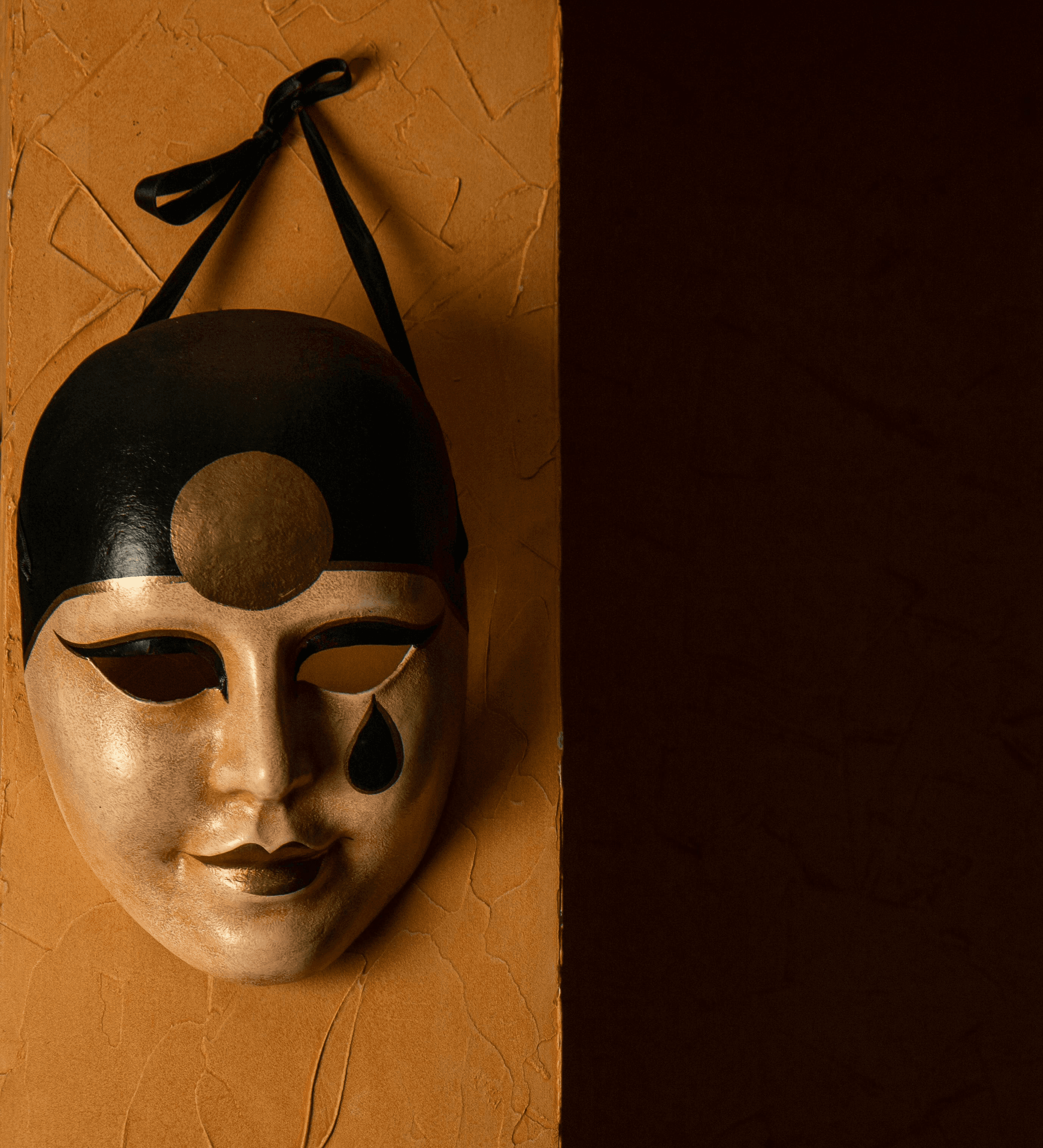
When children grow up in places where they cannot feel safe, valued, or respected, something both remarkable and sad happens. They begin to create versions of themselves that might be more acceptable, less likely to cause rejection or harm. These masks take many forms: the people-pleaser who reads every mood, the performer who only shows what others want to see, the child who learns to hide their feelings and needs completely. What starts as a way to survive becomes, over time, a trap.
Research in attachment theory, building on the work of Bowlby (1988) and Ainsworth (1978), shows that children need steady experiences of safety and care to develop secure attachment and a clear sense of who they are. When caregivers cannot provide this, often because they never received it themselves, children adapt by changing how they express themselves to keep whatever connection is available. Crittenden's work on attachment (2008) shows how these protective ways of being become more automatic as children grow, shaping not just behaviour but core beliefs about themselves and others.
The mask becomes survival because the alternative feels too risky. To be ourselves in a space that cannot accept us means potentially losing the very attachment we need to live. Research by Mikulincer and Shaver (2016) on adult attachment shows that people with avoidant and insecure attachment often keep these protective patterns into adulthood, even when their situation has changed. The mask that once kept us safe becomes how we see and approach all relationships and chances for connection.
The trouble comes as we grow older and these patterns stop working. Adults find themselves in relationships where the mask blocks real closeness, in jobs where performing leaves them feeling empty, or facing life changes where old ways of coping simply fail. Yet there is a deep contradiction here: even when we know these patterns hurt us, letting them go feels frightening. The resistance to change is not about being stubborn or lacking awareness but an automatic protective reaction. Our body remembers that showing our real self once meant danger, and it keeps warning us even when such protection is no longer needed.
This is often where therapy work begins: seeing that what once protected us now holds us back, whilst also recognising how scary it feels to drop the mask. Research by Fosha (2000) on attachment-focused therapy shows that healing happens not by forcing change but by creating relationships where being authentic becomes safe enough to try. The mask was built in relationship; it can only truly come off in relationship.
What version of yourself have you learned to show the world? When do you notice the mask appearing, and what does it protect you from feeling or facing? What might it feel like to let someone see you without it, even for a moment?
References:
Ainsworth, M. D. S., Blehar, M. C., Waters, E., & Wall, S. (1978). Patterns of Attachment: A Psychological Study of the Strange Situation. Hillsdale, NJ: Erlbaum.
Bowlby, J. (1988). A Secure Base: Parent-Child Attachment and Healthy Human Development. New York: Basic Books.
Crittenden, P. M. (2008). Raising Parents: Attachment, Parenting and Child Safety. Cullompton: Willan Publishing.
Fosha, D. (2000). The Transforming Power of Affect: A Model for Accelerated Change. New York: Basic Books.
Mikulincer, M., & Shaver, P. R. (2016). Attachment in Adulthood: Structure, Dynamics, and Change (2nd ed.). New York: Guilford Press.
Karl Grech is a Warranted Counsellor at Kara Therapy